
Nuanced.
Where real conversations happen — with host Aaron Pete.
Nuanced.
263. Danielle Smith: The Premier of Alberta
Use Left/Right to seek, Home/End to jump to start or end. Hold shift to jump forward or backward.
Alberta Premier Danielle Smith joins to explain why the province is holding a separatism referendum, whether Mark Carney can deliver a new pipeline, how politics changed her relationship with Naheed Nenshi and where her government has fallen short on the deficit and healthcare with host Aaron Pete
Premier Daniel Smith. Alberta is projecting a $9.4 billion deficit. Does the province have a spending problem, a revenue problem, or is it just an economy that's too dependent on oil?
SPEAKER_00Government revenues are still too reliant on oil and gas. And that's a very different problem.
Aaron PeteYour approval rating fell to 39% when the separation controversy started. Then it rebounded seven points to 46% after progress on the pipeline took place. What do you think Albertans are trying to tell you? Globe and Mail journalist Robert Fife came on the show, as well as Tony Keller, who's also a journalist with the Globe and Mail. They both said Prime Minister Mark Kearney has had a remarkable year. Do you agree?
SPEAKER_00There has been a uh a major change and a major difference in tone. Uh, but we still have to see some progress. I mean, it's one thing to make an announcement, it's another thing to do.
Aaron PeteDo you have any areas on all the different issues you've tried to tackle and your government's tried to move forward on that you say we didn't do that right, that didn't win, that didn't work, we could have done it differently. Do you have any regrets? Premier Daniel Smith, thank you so much for being willing to join us today. It's a privilege to have you on the show. Uh, you're well known across Canada, but for those of you of our viewers who don't know you, would you mind briefly introducing yourself?
SPEAKER_00Sure, I'm the Premier of Alberta. I got elected in October of 2022. And uh, we've been on a mission to restore confidence in the Alberta economy, the investment environment, double our oil and gas production, fight back against uh bad Ottawa policies, and and do some reform of our health system and various other social programs along the way, um, as well as addressing some of the woke activism that we've seen uh take root over the last decade to try to get back to a more balanced conversation so that we aren't constantly worried about cancel culture and uh and some of the uh the extreme abridgments of free speech that we've seen. So that's that's sort of the approach that I've taken to government in the in the last few years. And uh it seems uh that you know there's always going to be people who agree with you and people who disagree with you, but we do we try to chart a pathway where we think uh we're we're in sync with what the majority of Albertans want.
Aaron PeteThank you so much for watching and listening. I just wanted to say nuanced is completely independent and self-funded. We're not asking you for money. We're asking for 10 seconds of support. Like this video, subscribe, send this episode to a friend, and if you're listening on any podcast platforms, please rate us. Every new viewer helps us bring more of Canada's most consequential voices to the table. And my promise in return for your support is to keep doing the work and having the honest, thoughtful conversations I believe our country needs. Thank you so much. You have a fascinating origin story, and I'd like to take you all the way back to one of the courses you took, Executive Federalism, uh, that was taught by Peter Loheed, is how we say it in British Columbia. Um and one of the people that was in that class was Naheed Ninshi, who's now your opposition leader. I'm wondering, can you bring us back to that class? Uh, what was going on then? And is it what are your reflections on the fact that now you're sitting across the the aisle from him?
SPEAKER_00It was a very popular course. Um so the main professor was uh Professor Keith Archer at the time, uh, because Professor Roger Gibbons had been uh conducting it, but I think that he was on on vacation. That's my my my recollection. He was on some kind of sabbatical. And then what would happen is that uh Peter Laheed is how we uh we normally say it in Alberta, he he would come in and he would be the moderator of the the final forum. And the forum was a model first ministers' conference. And so there was a federal team, and then each team representing each of the provinces, and then there was also a media team. And so I was on the federal team. I was the uh Indigenous relations minister. And um uh and uh Nehed Nansy was on the Quebec team. There were a couple of other notables, uh Rob Anders, who went on to uh get elected at the federal level, he was on the Alberta team, and there have been various others who I I still run into in different roles that they that they've taken on in either political advocacy or or lobbying or some other way.
Aaron PeteBut Ezra Alvant was another one, correct?
SPEAKER_00I don't think Ezra was in that course in the year that I was in. He was on campus at the same time because he had been the past immediate past president of the reform club on campus. I was the the current president of the Progressive Conservative Club on campus. And so there were some areas we disagreed, but at that time more areas of disagreement than that than agreement. Uh, but uh he's become a good friend over the years uh since since we since we both um uh left university. But yeah, um and and uh uh Nehat Nenschi was also, I believe he was the um president of the Progressive or the uh the campus uh political science association. And so we had this wonderful club's office where whether you were a reformer or progressive conservative or uh not aligned or a liberal or an NDP, we we would all uh sit around and hash out our ideas. And it was a pretty healthy political environment to be in at the time. I I always wish that we could return to those days where people of different political views could be together in the same room and and have uh robust conversation but respectful conversation.
Aaron PeteI interviewed uh Nenshi, and he said that you guys were in the same so social circle, remained in contact many years uh after, and once you sought political advice from him, since he became opposition leader, he says you guys have exchanged perhaps a hundred words. Do you think partisan politics destroyed you guys' friendship?
SPEAKER_00Well, I think, you know, I uh my my view is that I I I try to be respectful to those who are respectful of me. And and the the tone that I've seen from uh from uh Nahed Nanshin since he got in in opposition hasn't really been conducive to having a very constructive relationship. But sure, yeah. I mean, when he was on uh when he was was mayor of Calgary, there were I I was a commentator and radio at the time, and so I would often uh have commentary about the decisions that he was making. We did also see each other uh on at various uh social environments. When I left politics, uh it was uh I left it a pretty bad way the first time, you may recall, back in in 2015. I did call him to seek advice about what life might look like after politics and if he had some advice more for me. But but yeah, I mean, we're in an environment, unfortunately, where I think that um at the the oppositional role, you don't need to be oppositional on everything. I I mean when I was in opposition, I took a bit of a different view because I was uh running a conservative party, the Wild Rose Party at the time. Um I was wanting to replace the Progressive Conservative Party. But somebody asked me if I was if I was always uh oppositional. And I went back and I said, no, we've voted with the government on 75% of their agenda. It was just that there were certain key areas that we felt that we needed to be oppositional on. I I haven't seen that with um the current opposition member. I don't think he votes with us on anything. Um, in fact, it seems like he's he's taken the view that he's got to oppose everything that we do. And so I think that's part of the reason why um it's it's actually the way he's conducting himself in opposition, which I think has led to to more of that polarization. I'm I'm always prepared to talk to folks to try to find some common ground where we can work together. I'll share stated. I mean, because look at the the absolute transformation in the relationship that I've had with the current federal government. I mean, I I had lots of reasons to oppose Justin Trudeau and Stephen Gibeau, backed by the the federal NDP at that time, Jugmeet Singh. But as soon as Mark Carney came in and did and chose not to uh look to the NDP for his political fortunes and was willing to work with us, and you know, that was the spirit that I discussed, a number of changes that we've been able to make. And I think we've had we've had great progress in undoing a lot of the bad laws that sadly had been advocated and advanced because of the NDP Liberal coalition at the federal level. So I I think I've demonstrated that I can reach across the aisle and find areas of common ground. And I'll continue to do that.
Aaron PeteI'll share uh hopefully uh as good news. I did ask Mr. Ninche if he could say anything good about your government and your work. And he did offer three examples. The the most important one from his perspective was your approach on recovery. And he said there are some things I'd tweak, but overall the recovery model that we're seeing in Alberta uh is effective and probably one of the most successful approaches. But Ninchi also said that on your first day in the in his first day in the legislature, you told him a story about getting a better grade in that university course by doing something he considered unethical or perhaps cheating. What story did you tell him?
SPEAKER_00Well, I don't know that it got a better grade as a result, but uh there was uh the Alberta team made the mistake of leaving their paper in the in the political club's office. And one of my friends grabbed it and copied it and gave it to me. And I was able to use it to craft our own strategy as the federal team. And we ended up winning that round. So I guess I'll leave it to others to decide whether or not that that's fair game or not. But it it was certainly helpful when we went into the round of negotiations to know what the other side's uh uh uh uh bargaining position was.
Aaron PeteThere's something fascinating I find about conservatism, which is that it has different kinds of personifications. I think you're one, Pierre Poliev is one, and then Doug Ford is one. Can you just help me understand what are kind of the core philosophical differences or similarities that you see? Because you're kind of the main three players we hear about a lot in the news when we talk about conservatism.
SPEAKER_00Well, just walk me through that again. So tell tell me the three that you want me to compare against?
Aaron PetePierre Polyev's, yeah, uh, Doug Ford's, obviously they are very they disagree on a lot, I think, um, about where conservatism is. And then there's yours. And um, I've seen some commentary saying yours is like conservatism in action, it's being personified by you in the strongest way through commentary I've read online. So I'm just curious, do you think that you're all kind of on the same page about issues, or are there stark differences between all of your views on what conservatism looks like?
SPEAKER_00Well, I would say conservatism is different depending on which part of the country that you're in. And and conservatism takes on a different tone depending on who the leader is as well and what the priorities are. I I think for our approach, we always try to find areas of common ground. And um, and so I say our conservative movement is an act of will. And and so um when when we get together at our AGMs, if we only ever focused on the things we would disagree on, our movement would split apart. And it has split apart in the past. And I've been, you know, I've been responsible for some of that split in the past. But my approach to it now is let's focus on the areas where we can agree. And so I think on areas where uh Pierre, Apolyev, Doug Ford, and I would all agree is number one, we've got to keep our level of taxes as low as we possibly can. Number two, we've got to focus on investment because the the best approach for somebody to be able to support themselves is to have a good paying job and to create an environment that allows that. It's a low-tax environment, but it's a low regulatory environment. I think generally we probably also take the approach that more competition is better than less competition, because it's through competition that you end up with innovation. Um, and it's it's through competition that you you end up getting better ideas. Um, and so uh we apply that to how we approach um government services is we like to have a lot of different providers of government services. Education is a prime example where we have public school, Catholic school, independent school, charter school, homeschooling, because we think that competitive environment um gives more choice to families. I think that that that would be another commonality. Um, I think that uh we we probably uh would also agree on our approach to our hardworking uh blue-collar tradespeople, that uh they they are the ones that when we build big, ambitious projects, it's the the pipe fitters and the electricians and the carpenters and the welders who are going to benefit from that. And so I would say that uh the conservatives have have done great work in making sure that uh we've elevated in esteem the skilled trades and professions so that we can get more people into those. So I can go through a number of things where we could find common agreement. And those would be very different than what we see on the left. I would say that uh on the left, we we see that they um tend to increase taxes, increase regulation, um, they shut down entire industries, the oil and gas industry being uh one of the latest that they they've been working to shut down. And uh I think that uh they've they've actually sacrificed the interests of working people on the altar of an extreme environmentalism that uh that is basically uh an oppose everything kind of approach. So so that's why I'm saying broad brushstrokes, conservatism has some very strong strains. So whether it manifests in Ontario slightly differently than it does in Alberta, slightly different than than federally, I would say that the the economics is what binds us. What I find is in Alberta is we have the ability, I think, to undo a lot of the damage of wokism and cancel culture, maybe because we have a bit more support of our public and a little bit more uh of an approach that that favors free speech. And so that's part of the reason why we've been able to take ideology out of the schools and why we were able to pass the Peterson law so that we could bring in our out-of-control professional colleges that were uh targeting professors like Jordan Peterson for no other reason. Then he did some mean tweets on Justin Trudeau. That's not a good enough reason for us to sanction and send people for re-education. So we've done some things along those lines. We we also took a strong position on protecting women and girls in sport um and making sure that young children didn't make decisions about uh transitioning their gender before they were adult enough to understand the long-term consequences and supporting parents' rights. I mean, that's another thing that we lead with is the parents always need to know what's going on with their kids. So it could be on some of those social issues because we've got a broader societal consensus in Alberta, we're able to move a little bit faster on some of those. But I would say on a lot of the big things, there's we're we're we're in great sync with um with federal conservatives as well as Doug Ford.
Aaron PeteThat's a really interesting point you raise. And I'd be interested in your thoughts on uh I've interviewed, you might know Francis Widowson, and she came out early on the unmarked graves controversy in Kamloops, and many other people did, and they were they have been maligned by many people for coming out with their positions on hey, like you have to dig in order to confirm whether or not there's 215 unmarked graves in that location. And with Jordan Peterson, with Francis Widowson, there's kind of this attack on people who come out early on issues, and your movement on some of the uh ideology in schools and stuff, you came out early, and then we started to see other states, other countries start to take action uh in a similar way after the fact. So it can be very hard to come out early on an issue like these that are considered very controversial at the time, and then society starts to move, and now I'm being invited onto campuses as a First Nations chief to talk about what Kamloop should do in response to these things. They don't want Francis still. They still are nervous about having those conversations with those individuals. How do you think we should think about people who come out early on issues and it's very controversial at the time, and then the the zeitgeist changes and their views start to become more normalized?
SPEAKER_00Well, let me say uh a word about uh about Francis. I mean, it's a it's a shame that we we can't have a conversation on that because I remember um I think I was on the air at the time when that came out, and someone called in and said priests and nuns were murdering children and burying them in mass graves. That that's what she thought was happening based on the reporting that she has read, which is a pretty extraordinary thing for someone to say. Um, there is um an argument about perhaps some graves had wooden headstones and the wooden head markers are gone. And uh perhaps there are also kids who died in the schools and their parents weren't informed. We actually have to be able to have a true understanding of what happened here if we're going to have an honest conversation about it and if we're going to address it in a way to make sure that we reconcile with the past. And I think it's a shame that uh we're we're not able to have an honest conversation about went on there because um it's it's it's seen to be something that is so controversial. Understanding is important because I mean, that one woman who I just started my story with, that is a pretty outrageous impression to leave people with, which has immense implications on society, immense implications on those whose accusations are being uh raised against them. Um but if we don't uh know what uh what occurred there, then we're not also going to be able to make a proper reconciliation with the past. So um so that's all I'll say on that. And I hope at some point we're we are able to have an honest conversation so that we know what actually did occur there. But I don't think that we're in that state now. And I think that people should be a bit more open-minded in hearing the arguments so that we don't end up with a misapprehension of what occurred in history. You have to know what really occurred in history if you're going to develop appropriate policies to address it in in the future. The approach I take is look, I mean, it took us a long time on the issue of our approach to to dealing with uh with uh hormone treatment and surgery for children. It took us a long time to get to the right position. And we talked to a lot of people about it. Um, but I I think what I what it came down to for me, because we did have some um some transgender individuals who were advising us, what it came down to for me was they said, I want to know what's going on with my kid. Didn't matter for them. Uh one in particular who has children now and said, I want to know what's going on with my kid. Um, and then it also was really uh struck me that uh one said, you know, if I had transitioned as a young person and not been able to have children, then yeah, it's harder for me to transition now. But you know what, I wouldn't have my kids. And so that's what I took by it is that you you have to be willing to talk to people who might disagree with you on your sort of broader agenda, but you have to hear the full perspective if you're going to make the right decisions. And then, of course, just watching uh young girls and women in sport feeling like they were being disadvantaged by not being able to compete against other women and girls in sport. And I think we have to ask the cells our the question. If if a woman's category and a girls' sports category exist, why does it exist? What's the foundational reason for that? And the foundational reason for that is because there's differences in physiology between men and women. If there weren't difficult differences in physiology between men and women, we never would have developed uh a women's category and a girl's category in the first place. And so I try to be very practical about it. I try to be very logical about it. I try to make sure that we're uh being measured in how we approach different issues. And then once we've landed on um on a pathway forward, then we have to go and we have to explain the reasoning. And I think in explaining the reasoning, we we did manage to get the majority of Albertans on our side.
Aaron PeteYour approval rating fell to 39% when the separation controversy started. Then it rebounded seven points to 46% uh after progress on the pipeline took place. What do you think Albertans are trying to tell you?
SPEAKER_00I would say that um the approach that I felt I needed to take on the issue of the referendum was that uh we have to follow the law. And um, our law in Alberta says that if a certain number percentage of uh petition signatures are gathered on an issue, that uh we're obliged to put it forward to our fellow citizens for a vote. That's the law here. Um BC has a similar law, in fact. Uh that's part of the reason why British Columbians ended up with a referendum on the HST, is because they got the requisite number of signatures. And there is also a similar law in Saskatchewan. So I know it's unusual in the rest of the country to have that kind of citizen initiative, but we had 700,000 people. One, you know, 400,000 signed one petition to remain and 300,000 signed a petition to leave. And we felt like to follow the law, we had to put something forward. Um, that being said, uh the uh the the there was no perfect question to put forward because the the at the moment the court has also said that we couldn't put forward a binding um uh vote on separation without extensive indigenous consultation. So I wanted to test the waters. So we've put forward a motion that allows people to vote to remain, uh, option one, or to start the process to leave, which is option two. And so I think that that approach um got everybody mad. Those who wanted to remain just wanted a yes-no question. Those who wanted to leave just wanted a yes-no binding question. And those who didn't want a question at all didn't uh wanted me to ignore the law. So um I think the approach again that I took was one where I'm demonstrating respect for uh for uh everyone who went through the process to try to get this meaningful debate to happen in Alberta. I trust Albertans and I need to know what they have to say. I need to know what uh direction they want me to go, and they'll have that option to tell me that on October the 19th.
Aaron PeteMr. Nenshee came forward and basically argued that the 400,000 who had petitioned to stay wouldn't want the question asked to begin with. And that's what he's hearing. How do you take that criticism?
SPEAKER_00Well, I know that there's a bit of a rewriting of history going on there. But if you look at the proponent of that Forever Canada petition, he was very clear in his media commentary, multiple interviews, and in the petition uh uh that he filed in the first place, that it he was asking for a referendum on whether to remain in Canada, yes or no. And if you do that question, there's consequences. What if we had just put that question on as it was? What if the majority of people voted no? What was I supposed to do then? So we as a government took the time to figure out how we could get um that question on the ballot, and it is on the ballot. Do you want to remain in Canada? Is option one. But we also felt like we needed to clearly understand what it would meant if people voted the opposite, that they didn't want to remain in Canada. It means, in our view, they want to start the process to hold a binding referendum to leave. And so I think that uh unfortunately they um maybe were trying to play a little bit too cute. And then at the end of it, when they got what they wanted, it was like the dog that caught the car, then they tried to change their mind and saying we don't really want this after all. But I have to look at it saying 400,000 people signed that petition campaign, expecting there to be a referendum. And so there is. And that's what the law says. If you uh get enough signatures, then it it will be put to the people for a vote.
Aaron PeteI don't think I have a right to comment on your province's politics because I live in British Columbia. Uh, and the experience I try and put myself in the shoes of an Albertan and some of the frustrations I've heard about how equalization payments work, how Ottawa has influenced your economy's ability to grow and flourish, uh, those are all factors that influence my understanding of why this is happening. But on top of that, correct me if I'm wrong, but it kind of also feels like there might be a strategy here that your conversations with Marcarney and Ottawa, in order for those to be fruitful, having something like, hey, if we don't see movement, if we don't see progress, there is a group of people who want to separate from Canada if we're not able to land on terms, which I to be honest with you, seems like it gives you great negotiation power when speaking with Ottawa. Is that the case? And was any of that factored into the decision to proceed with a referendum?
SPEAKER_00Well, as I said, the most important thing that the liberals did is not get into a uh a coalition government with the NDP, because because let's look at where the NDP has situated themselves now. Abby Lewis has called our uh uh our West Coast pipeline a national disaster. Um, he thinks it'd be a disaster for the climate. But you know what? It'd be actually be a disaster if we continued down the pathway that the NDP want us to go down, which is to phase out all fossil fuels. And they're not even talking just about Alberta's pipeline, they're also talking about liquid natural uh liquid uh liquefied natural gas as well. So that's the extreme view of the NDP. And that's the view that the uh current uh iteration of the federal liberals have rejected. And that opened up an avenue for me to have an honest conversation with uh with Prime Minister Mark Carney about where we find ourselves in in Alberta, that because of the extreme environmental positioning of his predecessor and the NDP, that has created this alienation in Alberta. There's no other industry that is um that was targeted in the same way that the the liberals targeted us with the NDP backing. Um out and out talking about leaving it in the ground, failing to develop it, phasing it out. Those are the language that we use. When I went to Quebec, I uh I had a meeting of uh of uh of various business leaders. And I said, imagine if I came here as an Alberta politician and said, It's my mission to shut down your hydroelectric industry. It's my mission to make sure you never build another aluminum smelter. Imagine uh if I did that, because that's what Stephen Gibeau did to us when he came to Alberta. And now you can understand a little bit about why we have tension in the country. So I think on that basis, the prime minister and I have been prepared to have a reset. And I think that you've seen we've given a little, they've given a little, and we've gotten to a place where I think this is going to be good for the country for us to develop the West Coast pipeline. It's only a small number of very extreme voices in the NDP and the uh and the and the uh the Green Party that don't want us to do this anymore. And so that's uh that's part of the reason why I'm I feel encouraged, more encouraged than I have for a long time. That when you've got two major governing, government ready parties, the conservatives and the liberals, that uh both of them are of the view that we need to develop our resources and we need to get them to market and we need to work together. That's really positive for the country. And so that's what we're building on. That's what I'm trying to tell Albertans that, yeah, the country didn't work so well in the past 10 years, but it's working better uh today, and it's going to keep on working better if we keep on working at it. And I told the prime minister I take the separatist sentiment seriously. I told him he should take it seriously as well. But I think you've also seen that the two of us are willing to work together to address the issues. And that's really what it's about. You don't you don't address issues by ignoring them. You address issues by validating that they are significant, they are real, and that we have to do something positive to be able to turn things around. And that's that's what I think is going to be persuasive to Albertans. It's not, it's not just papering over the the 10 bad years. It's actually addressing the the reasons why that sentiment developed. And it was getting rid of the emissions cap, which we did, getting rid of the net zero power rigs, which we did just today. Um, the other one of the other main ones, they announced for sure that we're not going to have net zero vehicles as well, because it would have added something like $56 billion in cost to the economy. So someone has to be the one to say you're going in the wrong direction. You're driving the entire country off a cliff. I tend to be the person who uh is the first to stand up and say that. I takes me a little while to persuade others to my viewpoint, but I'm I'm glad to see that others are seeing the same thing that we saw three and a half years ago.
Aaron PeteOn the note of Mark Carney, I'm just wondering uh Globe and Mail journalist Robert Fife came on the show as well as Tony Keller, who's also a journalist with the Globe and Mail, they both said Prime Minister Mark Carney has had a remarkable year. Do you agree?
SPEAKER_00I would say that um he if you want to compare him to where we were under Justin Trudeau, that there has been a uh a major change and a major difference in tone. Uh, but we still have to see some some progress. I mean, it's one thing to make an announcement, it's another thing to do. And so we are um acting in good faith, going through the major projects office uh approach to get our West Coast pipeline approved. And I think I'll I'll feel a lot more uh able to answer that question when I see some shovels in the ground. But I think it the uh that the tone has absolutely changed, but we still need to see some progress. We need obviously to see an agreement on the Canada-US-Mexico agreement, which is foundationally important to every part of our country to make sure that an agreement of that type continues in in whatever form it's going to continue in the future. Um, I've been encouraged that there's a number of new trade agreements that have been signed with uh with other markets. Uh, and it'll, again, with the passage of time, we'll see what that does to our exports. Um, we also have another conference that's coming up in September that I'll be attending with um try to attract additional investment dollars with all the big sovereign wealth funds. So, what comes out of that, I think, will also uh be important. So I think that there's a lot of steps and policy reversals that have occurred, which have set the stage for some uh some positive things, but I think we still need to see some um some action. We still need to see some deliverables.
Aaron PeteTwo more quick questions. I I know you're busy, so thank you so much for doing this. Alberta is projecting a $9.4 billion deficit. Does the province have a spending problem, a revenue problem, or is it just an economy that's too dependent on oil?
SPEAKER_00It's not an economy that's too dependent on oil and gas because I our economy is doing great. We have had 300,000 jobs that have been created since I got elected in October 2022. We have more people working in the tech industry and in the tourism industry than we do in oil and gas. And so we have huge opportunity across a whole range of diversified industries for people to have meaningful, high-paying jobs here. We have got the largest workforce participation rate, we've got the highest weekly earnings, our investments are going up. So our economy is great. Government revenues are still too reliant on oil and gas. And that's a very different problem. Now, what we have what we chose to do, predecessors to mine in Alberta, is chose to have lower tax rates and to subsidize the difference with oil and gas revenues. And what happened over the years is that more and more of the oil and gas revenues went to do those subsidies. So we've got to find a way to get those two things in balance. Um, we can now balance our budget on $74 WTI. Uh, but we need to get to a point where we can balance the budget if WTI goes down to 65. Because if you look at what happened with the budget, we were uh expecting at that time that uh WTI would be trading at $60, which would have resulted in uh in that shortfall. So those are the conversations that uh we have to have right now is how do we uh slow down the rate of growth of our programs so that our revenues grow faster than our expenditures, and so that we can uh become less and less reliant on oil and gas revenues. And that's the an active conversation that I'm having with my finance minister now.
Aaron PeteWhether people agree with you or not, or your government or not, you have done a lot on a lot of different files and made significant moves on a lot of different files. I'm just wondering, as a leader, uh, I think it's important to stay humble and be mindful of of where you've potentially fallen short. Do you have any areas on all the different issues you've tried to tackle and your government's tried to move forward on that you say we we didn't do that right, that didn't land, that didn't work, we could have done it differently. Do you have any regrets?
SPEAKER_00Well, I I have to tell you, in in in virtually every area, you you have to ask that question because the the the biggest challenge in leadership is you have to be able to make a decision. Because if you don't make a decision and keep moving forward, everything gets bottlenecked. And so, yeah, I do make a lot of decisions. And sometimes we we have to do some slight modifications and do some course correction in order to be able to address them. There's lots of things that uh we have done on healthcare, and many of them have been very successful. We now have more doctors and nurses that are offering uh nurse practitioners that are taking on private patients. We've got um a robust uh pharmacy area, which offers a fuller scope of practice for our uh uh our pharmacists as well as paramedics to be able to operate in our market. We're building more uh long-term care facilities, which is going to be really important on mental health and addiction. We've seen a 40% decrease in opioid deaths since uh since we started down our recovery path, which is uh focusing on recovery rather than safe injection sites and safe supply. So those are things in healthcare that are working, but we uh haven't made as much progress on uh on improving the patient experience in the hospital environment. And that's uh number one for me over the next year is now that we have taken and are making progress in those other areas of health, how do we make sure that when a person walks through the door that they're seen and treated and released or seen and and uh uh uh and admitted to hospital efficiently so that they're not waiting for hours and hours in emergency rooms? We have to also make sure that that uh we we have uh fewer and fewer people who are waiting longer than than medically recommended. And so we're trying new things. So we tried a few things and they didn't get us the progress that we want. And so now we're doing dual practice. We're doing uh preventative health testing. People are going to be able to, if they think something's wrong, go and pay for their own preventative health tests. And if they find that there's something that they need to get treatment for, we'll get them in right away. And we're also uh doing uh patient-focused funding. We're having funding follow the patient to receive the uh the surgery that they're uh that they're seeking so that we can reward hospitals that are able to find a way to do more surgeries. And so that's the sort of the next stage. Um, not everything uh uh uh was able to get all of those outcomes immediately, but you don't just stop and say, oh, gee, that didn't work. You say, okay, well, it didn't work perfectly. Let's try to find something else. And so that's what we're gonna keep on doing.
Aaron PeteWell, thank you, Premier Daniel Smith, for sharing your time. I'll I'll say one thing that I think is important from my perspective. I have complimented the Alberta next panel that you went through because I think it is democracy in action. And I've urged uh the Premier David Eby and uh British Columbians to consider that process. We have a lot of controversial stuff going on in our province right now, and we just need to hear from citizens. We just need to know where the temperature is on so many different issues. And I've promoted your process. I get that a lot of people might disagree with some of the questions and some of the ideas that came from that, but that has nothing to do with me. I just believe citizens should be consulted, they should be invited into conversations, they should be able to participate. And it just reminds you that democracy can be so scary to people. The idea that you're doing this separatism referendum conversation, a referendum about whether or not to have a referendum, scares people. And it's like, do you not trust the citizens to make an informed decision? Like, I am a First Nations chief. I just implement what my citizens and what my community members tell me they want. It has nothing to do with me. I'm not, I don't know what's best for them. They know what's best for them. I'm just letting them make their decisions and I'm here to enact what they want. And I know that's controversial to some people, but I just think it's so important. Immigration was an area federally that we did not get to vote. We did not get to participate in a process to make such a major decision that really reshaped our relationship with immigrants in a worse way that I don't support. I don't think we should be mean to people because they had they legally came to this country. I think we should be mad at the federal government for how they handled the file and that they didn't consult with Canadians. And when you don't do that and you have uh issues arise with the process, then you get people thinking, okay, you didn't make this decision for me as a Canadian. So who did you make it for? Lobbyists, the WHO, um, like the World Trade Organization? Who isn't making you make these decisions? And that's where a lot of those conspiracy theories came from is like you're not doing it because I didn't vote for this. I didn't say I want more immigration at this level. And so I just I respect your ability to go back to your citizens and go get their feedback and let them guide your decision making. And I'm urging my government in British Columbia to consider taking that approach. We might not like what we hear. It might be tough to hear some of the comments they have, but that's your job as an elected leader. And so that's my my compliment for you is I just I see you do that and I see you take a lot of tomatoes for that. And I just don't understand how we can live a democracy and not like the fruit that democracy bears.
SPEAKER_00Well, let me then just add one more to that because um we had a very controversial decision for a major road bypass that needed to be made. And uh the Soutina Reserve was right near the city of Calgary, and they took it to their people to get a referendum to go ahead with it. And guess what? The first referendum failed. And so then their leadership went back and negotiated a different arrangement, and then it went to the people and it it got approved. And it's been an incredible economic opportunity for the nation. There's been so much positive that has come out of it, but I think it was a better process that they had the buy-in uh of their own citizens through a very similar type of process. So, referendum, it doesn't have to be uh it's only done in Alberta or it's only done in non-Indigenous communities. It can be done anywhere. It's a it's the kind of approach that if you really care about what your people say, yeah, you need to hear them out. And if you get it wrong, then you you need to find a way to either change the deal to be persuasive to get it right, or you need to switch directions. So thanks for the compliment. But I think it's a type of approach that can be used in more in more environments and in more questions. And I think it'd be good for democracy to do it.
Aaron PeteI think you're completely right. Thank you again, Premier Daniel Smith, for sharing your time today.
SPEAKER_00You bet. Thank you.
People on this episode
.png)
Podcasts we love
Check out these other fine podcasts recommended by us, not an algorithm.

Modern Wisdom
Chris Williamson
The MMA Hour with Ariel Helwani
SB Nation
Lex Fridman Podcast
Lex Fridman
PBD Podcast
PBD Podcast
Huberman Lab
Scicomm Media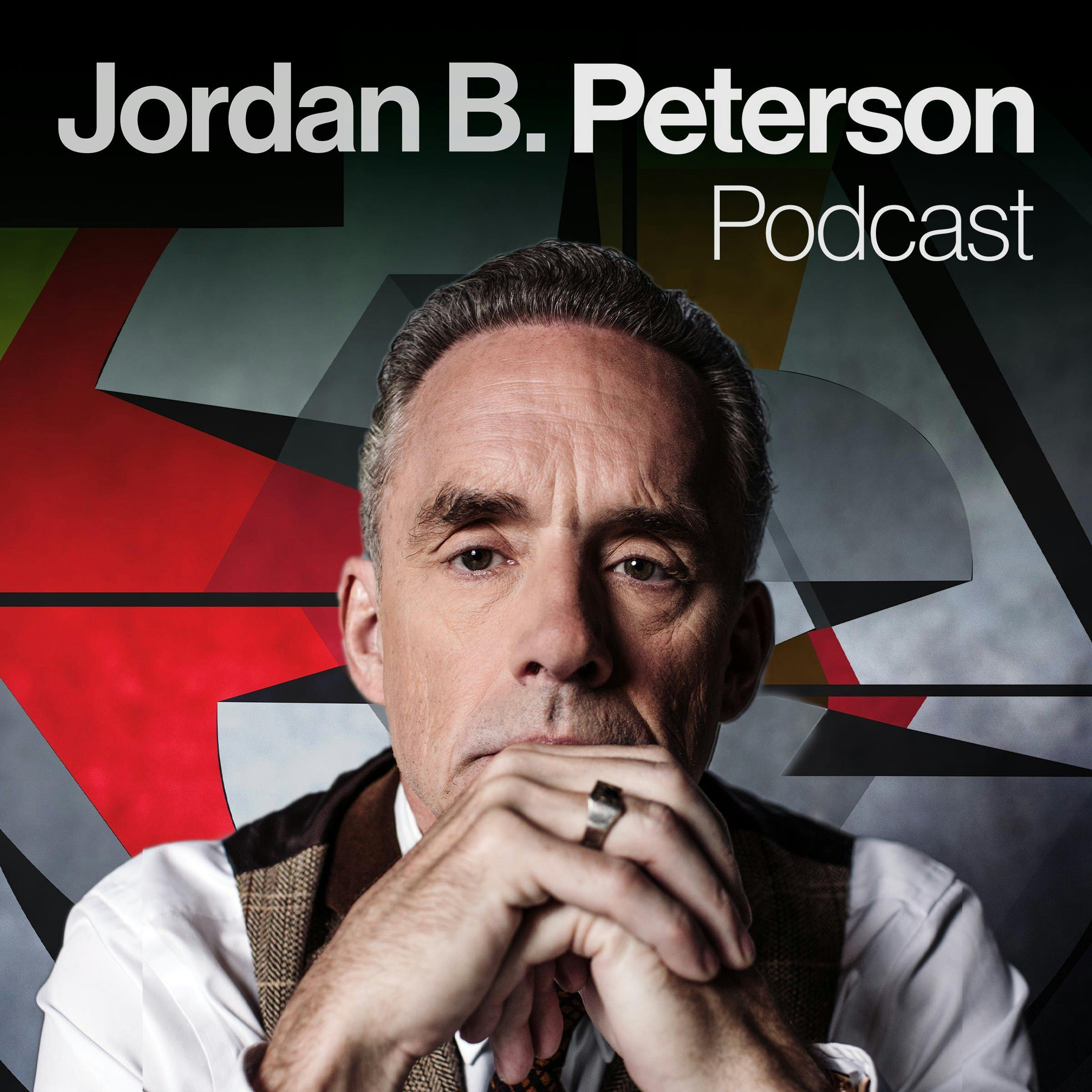
The Jordan B. Peterson Podcast
Dr. Jordan B. Peterson